

What Is an Alarm Valve? Structure, Working Principle & Installation Guide
What Is an Alarm Valve? Structure, Working Principle & Installation Guide
An Alarm Valve is one of the most important components in fire protection systems. It is designed to detect water flow within sprinkler piping systems and activate an alarm signal when a fire occurs. Alarm valves are widely installed in factories, high-rise buildings, residential complexes, shopping centers, warehouses, and industrial facilities.
In this article, we will explore the structure, working principle, classifications, applications, and installation procedures of alarm valves in fire protection systems.
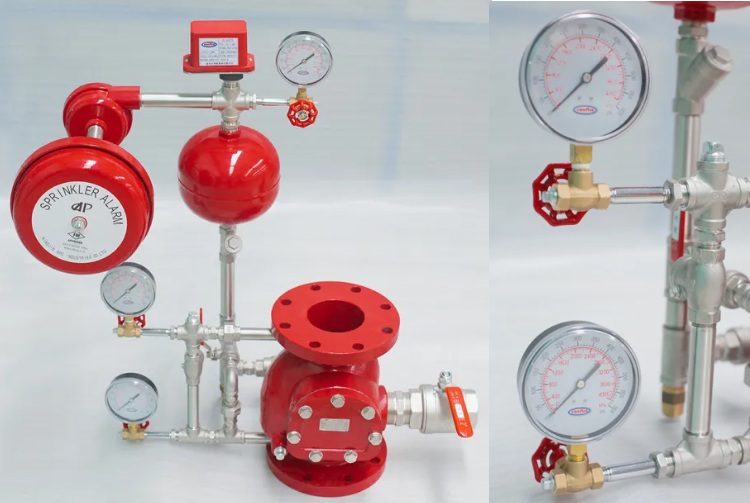
What Is an Alarm Valve?
An Alarm Valve is a specialized check valve used in automatic sprinkler fire protection systems. Its primary function is to activate an alarm signal whenever water begins flowing through the sprinkler system due to sprinkler head activation during a fire.
When a fire occurs, water passing through the alarm valve activates either a water motor gong or a pressure switch, sending an alarm signal to the fire alarm control panel and alerting occupants within the building.
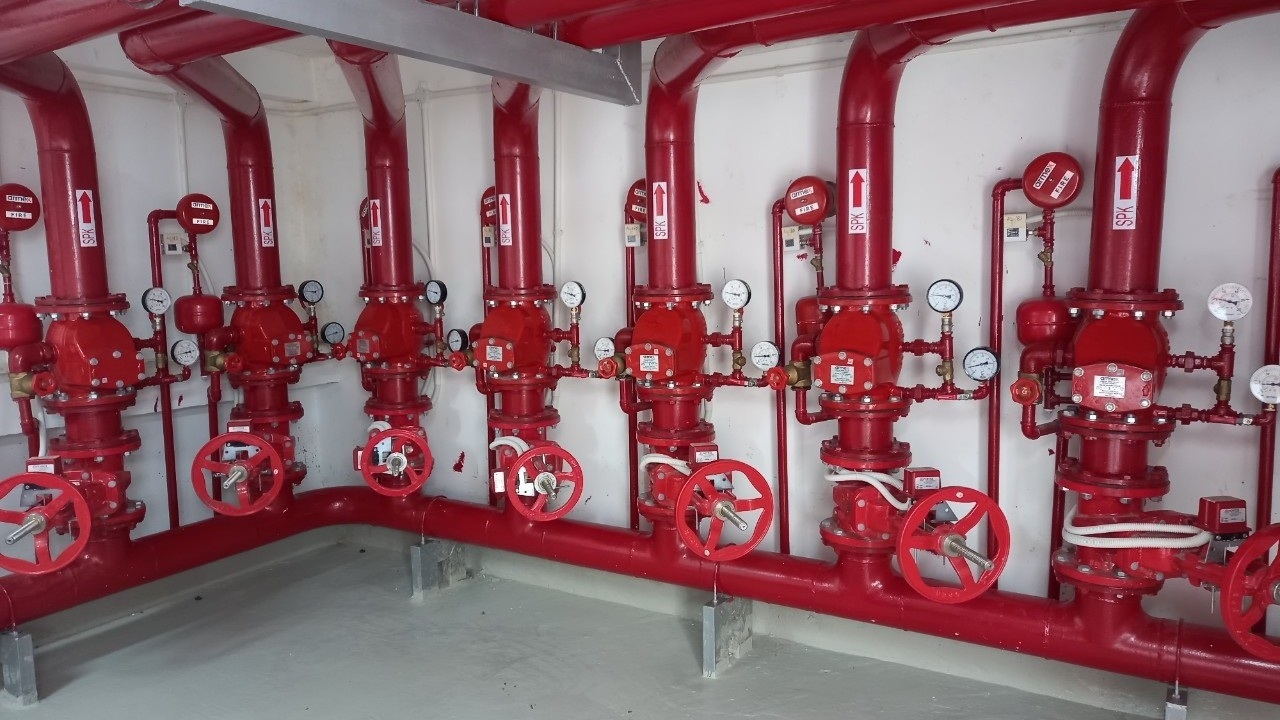
Main Functions of an Alarm Valve
- Detect water flow in fire sprinkler systems
- Activate audible alarm signals
- Send signals to fire alarm control panels
- Prevent backflow
- Protect pumps and piping systems
Alarm valves are commonly coated with red epoxy paint, the standard color used in fire protection systems for easy identification.
Alarm Valve Structure
Although alarm valves come in various designs and brands, they generally consist of the following main components:
1. Valve Body
The valve body encloses and protects all internal components.
Common Materials:
- Ductile iron
- Cast iron
- Stainless steel
- Bronze
- Carbon steel
Features:
- High pressure resistance
- Corrosion resistance
- Flanged connection design
- Red epoxy-coated exterior
2. Pressure Gauge
The pressure gauge monitors pressure within the fire protection system.
Functions:
- Monitor system pressure
- Detect abnormal pressure conditions
- Assist with maintenance and inspection
3. Water Motor Gong
The water motor gong is the mechanical audible alarm device.
Operation:
- Water flow activates the gong mechanism
- Produces a loud alarm sound
- Alerts people nearby to fire emergencies
4. Pressure Switch
The pressure switch sends electrical signals to the fire alarm control panel.
Functions:
- Indicate ON/OFF status
- Integrate with automatic fire alarm systems
- Enable remote monitoring
5. Check Valve Clapper
Alarm valves function similarly to check valves.
Functions:
- Allow water flow in one direction only
- Prevent reverse flow
- Protect fire pumps and pipelines
Working Principle of an Alarm Valve
Alarm valves operate automatically based on water flow pressure inside the sprinkler system.
Normal Condition
Under normal operating conditions:
- The valve remains closed
- No water flows through the alarm line
- System pressure remains stable
- Alarm devices stay inactive
Fire Condition
The operating sequence is as follows:
Step 1: Sprinkler Head Activation
High temperatures cause the sprinkler bulb to burst.
Step 2: Fire Pump Activation
Water is pumped into the sprinkler piping system.
Step 3: Alarm Valve Opening
Water pressure lifts the clapper inside the valve.
Step 4: Alarm Activation
Water flow activates:
- Water motor gong
- Pressure switch signal to control panel
Step 5: System Reset
After water flow stops:
- The valve closes automatically
- Alarm devices stop operating
- System pressure stabilizes
Alarm Valve Technical Specifications
Below are common technical specifications for alarm valves:
| Specification | Value |
|---|---|
| Size Range | DN50 – DN300 |
| Materials | Cast iron, stainless steel, bronze, steel |
| Connection Type | Flanged |
| Connection Standards | DIN, ANSI, JIS, BS |
| Working Pressure | 1.4 – 16 bar |
| Operating Temperature | Up to 80°C |
| Coating | Red Epoxy |
| Certification | UL/FM |
| Warranty | 12 months |
Types of Alarm Valves
1. Wet Alarm Valve
This is the most commonly used type.
Features:
- System piping is constantly filled with water
- Fast response time
- Suitable for normal temperature environments
Applications:
- Residential buildings
- Commercial buildings
- Factories
- Shopping centers
2. Dry Alarm Valve
Dry alarm valves use compressed air or nitrogen inside the system piping.
Features:
- Prevents pipe freezing
- Suitable for cold environments
- Reduces freezing damage risks
Applications:
- Cold storage warehouses
- Outdoor parking garages
- Low-temperature facilities
Classification by Installation Type
Vertical Alarm Valve
- Installed on vertical pipelines
- Space-saving design
Horizontal Alarm Valve
- Installed on horizontal pipelines
- Easier maintenance and operation
Advantages of Alarm Valves
Alarm valves are widely used due to their many advantages:
- Fully automatic operation
- Fast fire detection response
- Reliable alarm signaling
- Prevents reverse water flow
- Durable construction
- Excellent corrosion resistance
- Low operating cost
- Long service life
- UL/FM certified
- Easy installation and maintenance
Applications of Alarm Valves
Alarm valves are installed in various fire protection systems including:
Industrial Facilities
- Manufacturing plants
- Industrial zones
- Chemical factories
- Power plants
Residential Buildings
- Apartments
- High-rise buildings
- Housing complexes
Public Facilities
- Schools
- Hospitals
- Shopping malls
- Cinemas
- Airports
Warehouses
- Flammable goods storage
- Paper warehouses
- Plastic storage facilities
- Chemical storage facilities
Alarm Valve Installation Guide
Preparation Before Installation
- Select the correct valve size
- Verify connection standards
- Prepare installation accessories
- Clean the pipeline system
- Inspect valve condition
Installation Steps
Step 1: Install According to Flow Direction
Follow the flow direction arrow marked on the valve body.
Step 2: Install Accessories
Typical installation order:
- Alarm valve
- Pressure gauge
- Pressure switch
- Water motor gong
Step 3: Tighten Flange Connections
Ensure leak-free sealing.
Step 4: Test the System
- Perform water discharge testing
- Check alarm gong operation
- Verify pressure switch signals
- Inspect for leaks
Important Notes for Alarm Valve Systems
To maintain reliable operation:
- Test the alarm gong regularly
- Clean pipelines periodically
- Inspect pressure switches
- Monitor pressure gauges
- Replace damaged gaskets promptly
- Avoid overpressure operation
- Perform regular maintenance according to fire protection standards
Conclusion
An Alarm Valve is a critical component in automatic sprinkler fire protection systems. By detecting water flow and activating alarm signals quickly, it helps minimize fire damage and improves building safety.
Proper valve selection, professional installation, and regular maintenance are essential for ensuring stable, efficient, and long-lasting fire protection system performance.
Contact Information
THEGIOIVAN.NET
Email: sales1@pm-e.vn
Hotline: 0902601875
Related Posts

-
13/05/2026
What Is a Deluge Valve? Structure, Working Principle & Installation Guide
Learn everything about Deluge Valves including structure, working principle, applications, installation, operation, and maintenance for fire protection systems.

-
10/05/2026
Industrial Valve Installation Guide: Proper Techniques and Important Considerations
Learn the correct industrial valve installation process according to technical standards, common installation mistakes, pressure testing methods, maintenance procedures, and important considerations for pipeline valve installation to ensure safe and efficient system operation.



TLV J3X-5 Free Float Steam Trap | Genuine Japanese Steam Trap
7,996,000 đ 8,450,000 đ


TLV J3X-2 Free Float Steam Trap | Genuine Japanese Steam Trap
7,996,000 đ 8,345,000 đ

Float Valve LP8N-B Venn
Contact