


Price: Contact
Remove water droplets entrained in steam or air with TLV's DC series steam separators.
The DC cyclone separators can be installed on steam lines and at the inlet side of equipment to enable removal of virtually all water droplets within the flow. This can significantly improve heat quality, preventing problems such as:
- Low Heating Efficiency
- Product Defects or Off-spec
- Erosion of piping or valve parts, and other related problems
Order
Product information
Cyclone Separators for Steam (with Built-in Trap)
DC Series
Specifications
Remove water droplets entrained in steam or air with TLV's DC series steam separators.
The DC cyclone separators can be installed on steam lines and at the inlet side of equipment to enable removal of virtually all water droplets within the flow. This can significantly improve heat quality, preventing problems such as:
- Low Heating Efficiency
- Product Defects or Off-spec
- Erosion of piping or valve parts, and other related problems
Cyclone Separators Pamphlet (259 KB)
Benefits and Features
Supplies Dry Steam
The built-in Cyclone Separator removes condensate from the flow of steam with a high separation efficiency of 98%. This yields improved productivity and product quality due to the resulting elimination of water hammer and the improved dryness of the steam.
Compact and Economical
As the separator and the trap are a single unit, the usual need to install a trap after the separator is eliminated, resulting in both cost and space savings.
Application Areas
Equipment that uses live steam, such as steam main lines, steamers, blowers, atomizers and kneaders, and a variety of types of steam heating equipment.
Product Details
| Model | Photo | Connection | Body Material | PMO (MPaG) | TMO (°C) | Discharge Capacity (kg/h) | Specifications | Manual |
|---|---|---|---|---|---|---|---|---|
| DC3S | 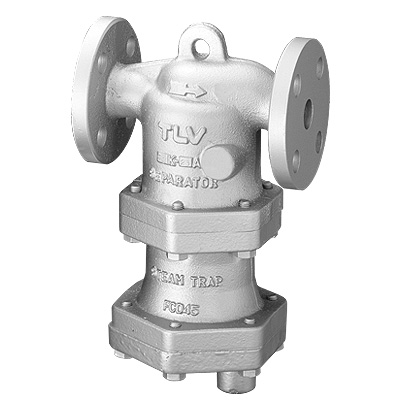 |
Screwed | Cast Iron (FC250) |
2.1 | 220 | 940 | Specifications | Manual |
| Flanged | ||||||||
| DC5S | 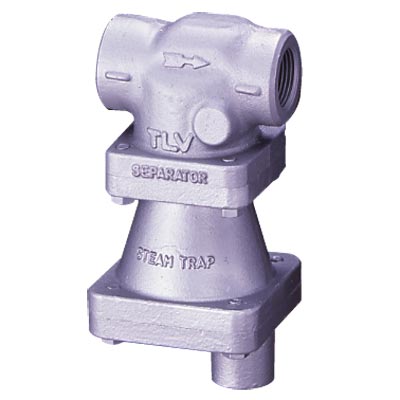 |
Screwed | Bronze (CAC407) | 1.6 | 220 | 85 | Specifications | Manual |
- PMO = Maximum Operating Pressure
- TMO = Maximum Operating Temperature
- The latest version of each product's instruction manual can be found on this page.
Overview
Why a Separator is Necessary
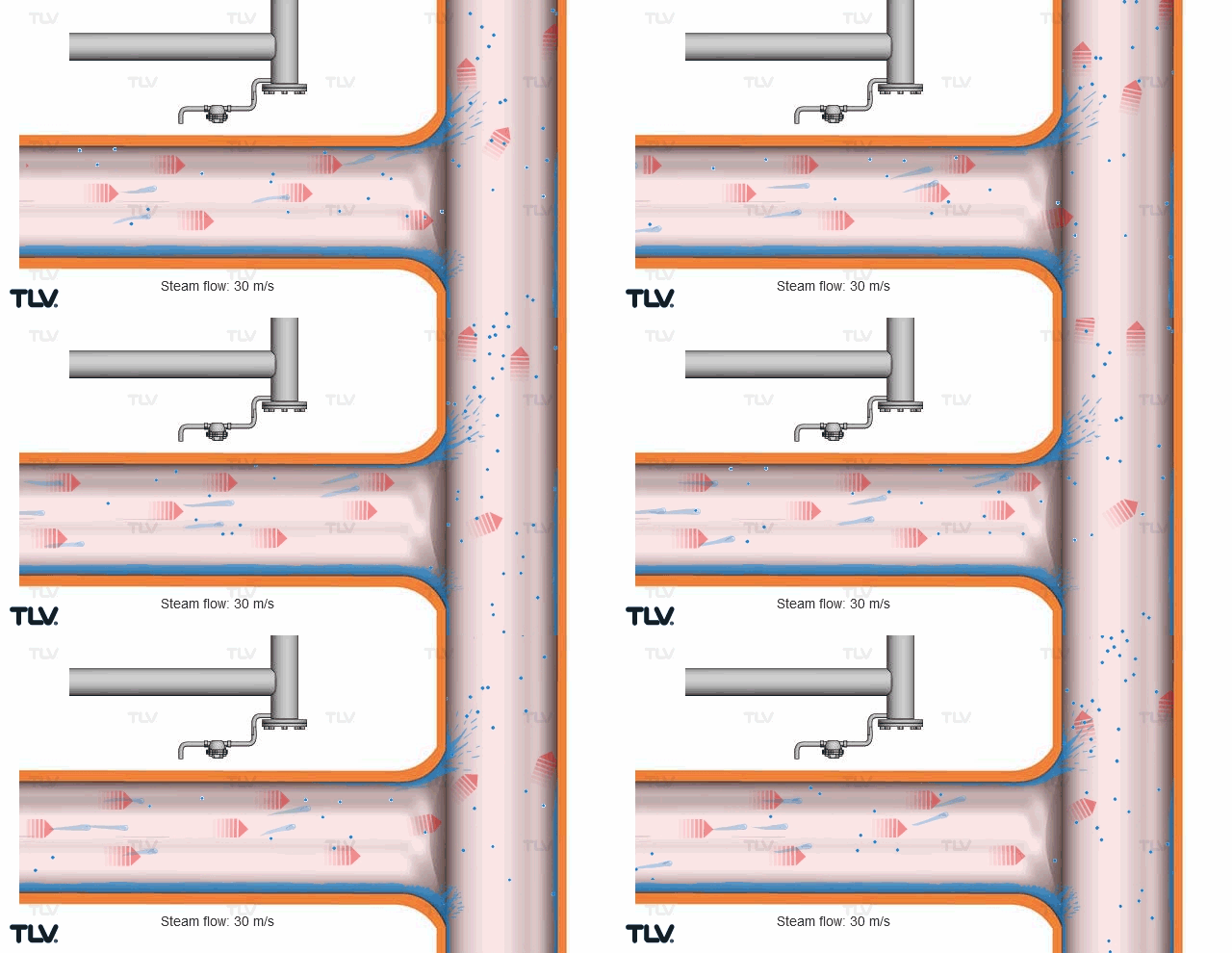
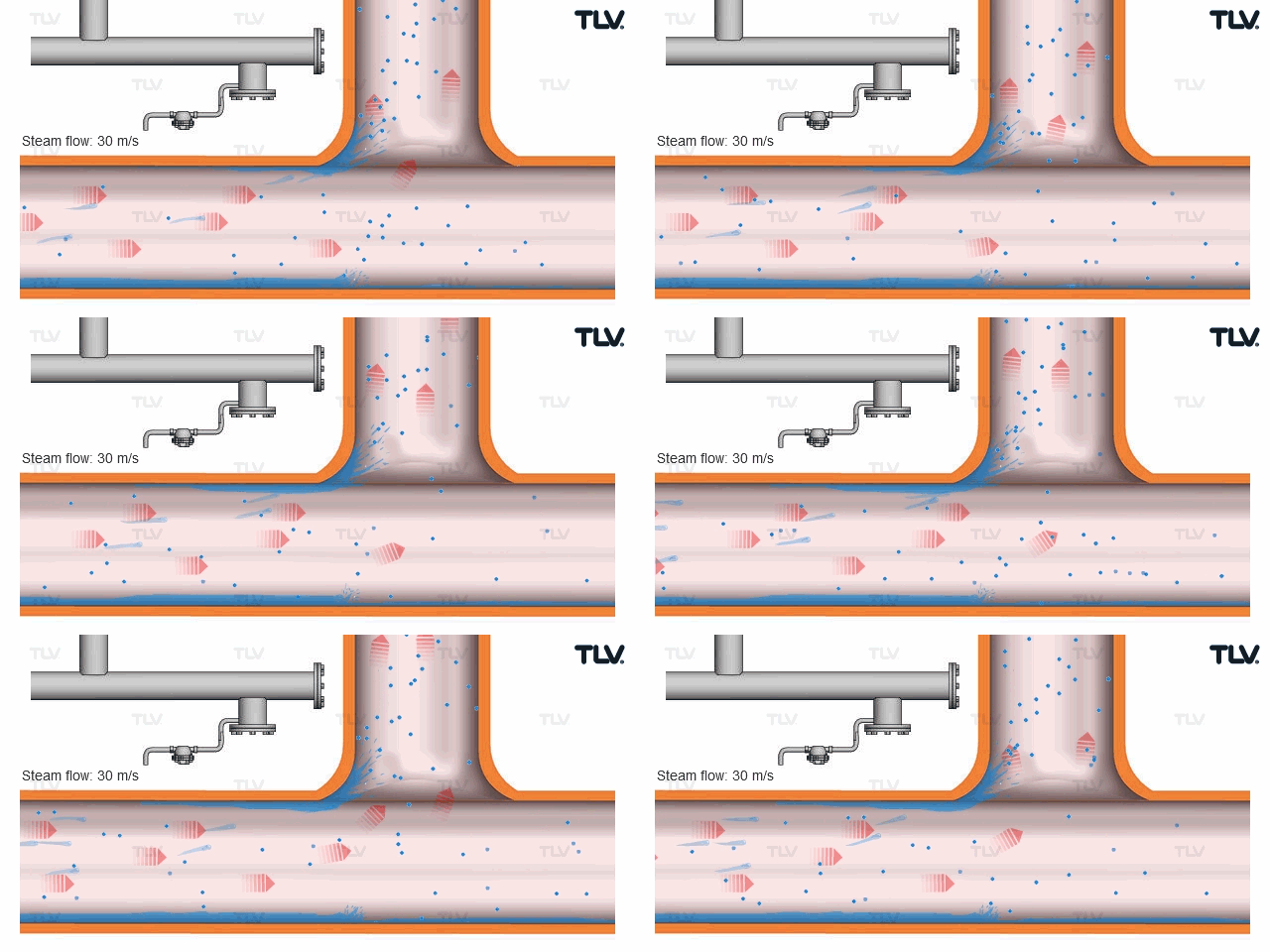
High velocity condensate flows through the drip leg
Drip legs are designed to remove a considerable portion of the condensate flowing through piping – that which has fallen out of the steam flow, but cannot remove the water droplets entrained within the flow itself.
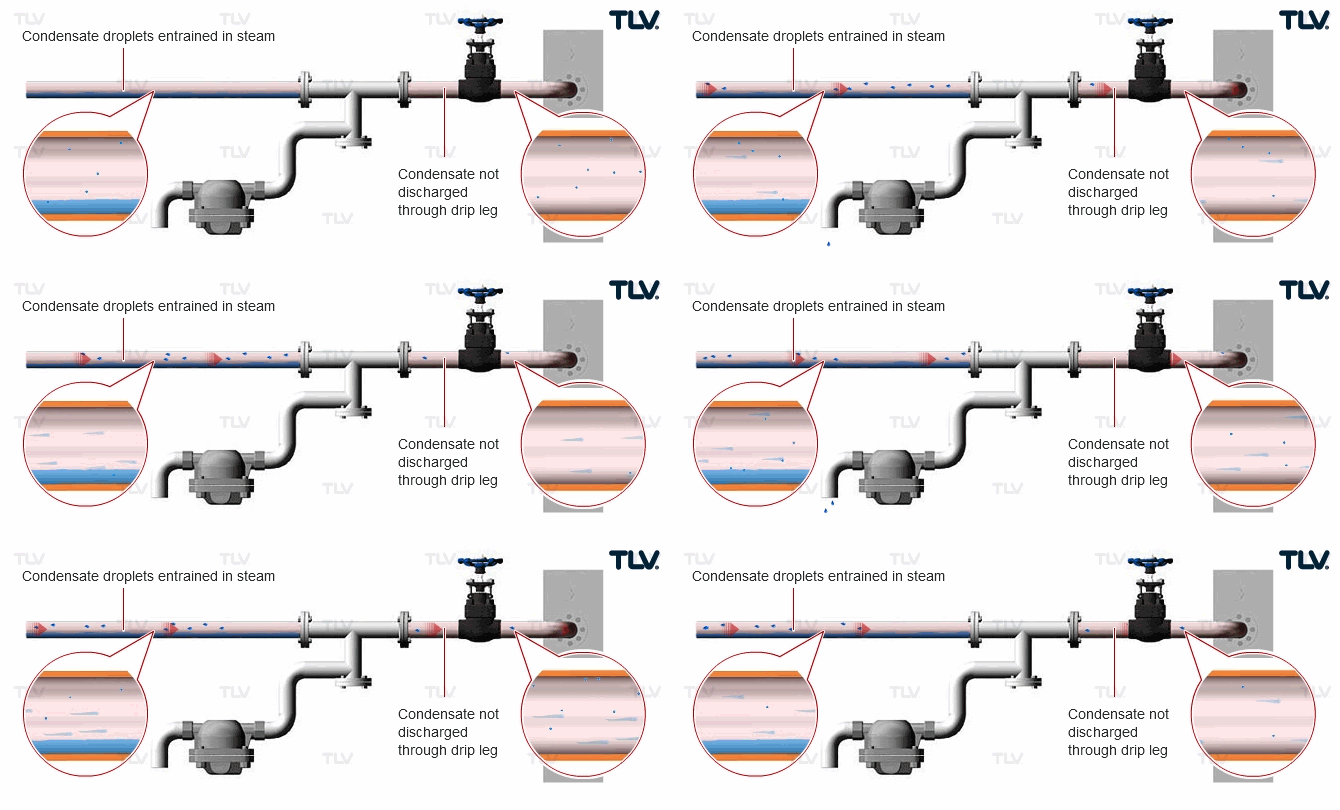
Cut-view of Condensate Discharge Through Drip Leg
Water droplets entrained in steam will be carried over and pass by the drip leg because of the speed at which steam flows through piping.
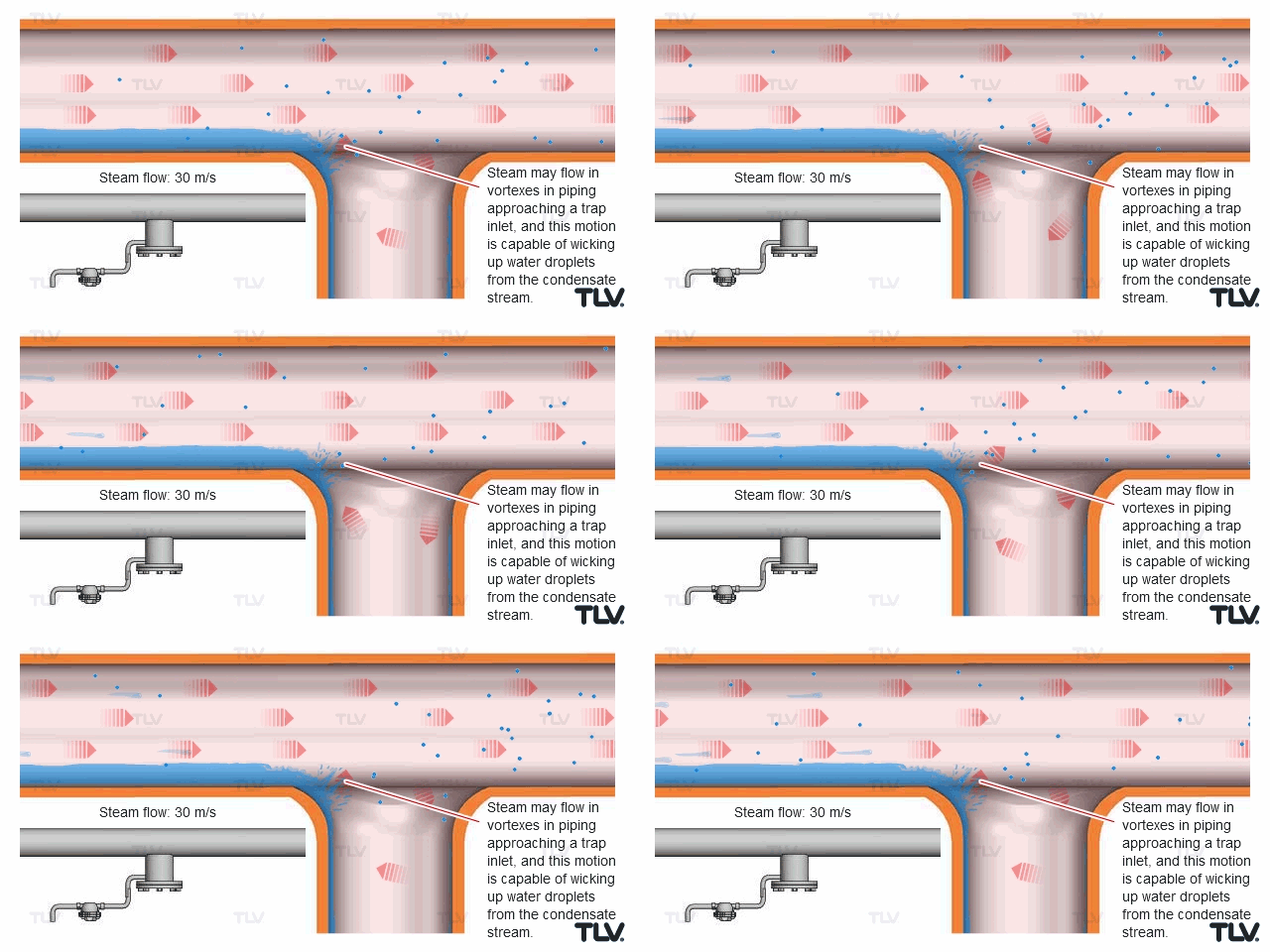
Negative Impact of Condensate Droplets in Steam Processes
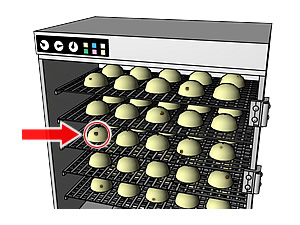
Elbow in Piping
Water droplets may lead to the formation of pin holes from LDI erosion at elbows in the piping.
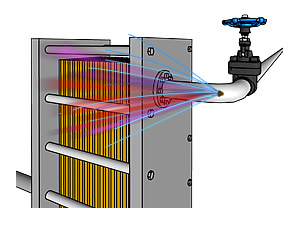
Direct Heating Application
Water droplets may cause product defects when coming in direct contact with the product being heated, or reduce heating quality / efficiency when contacting heat transfer surfaces.
Separating Condensate from Steam
DC Series: Up to 98% Separation Efficiency
Condensate entrained in steam is mechanically removed using a cyclone separator for steam.
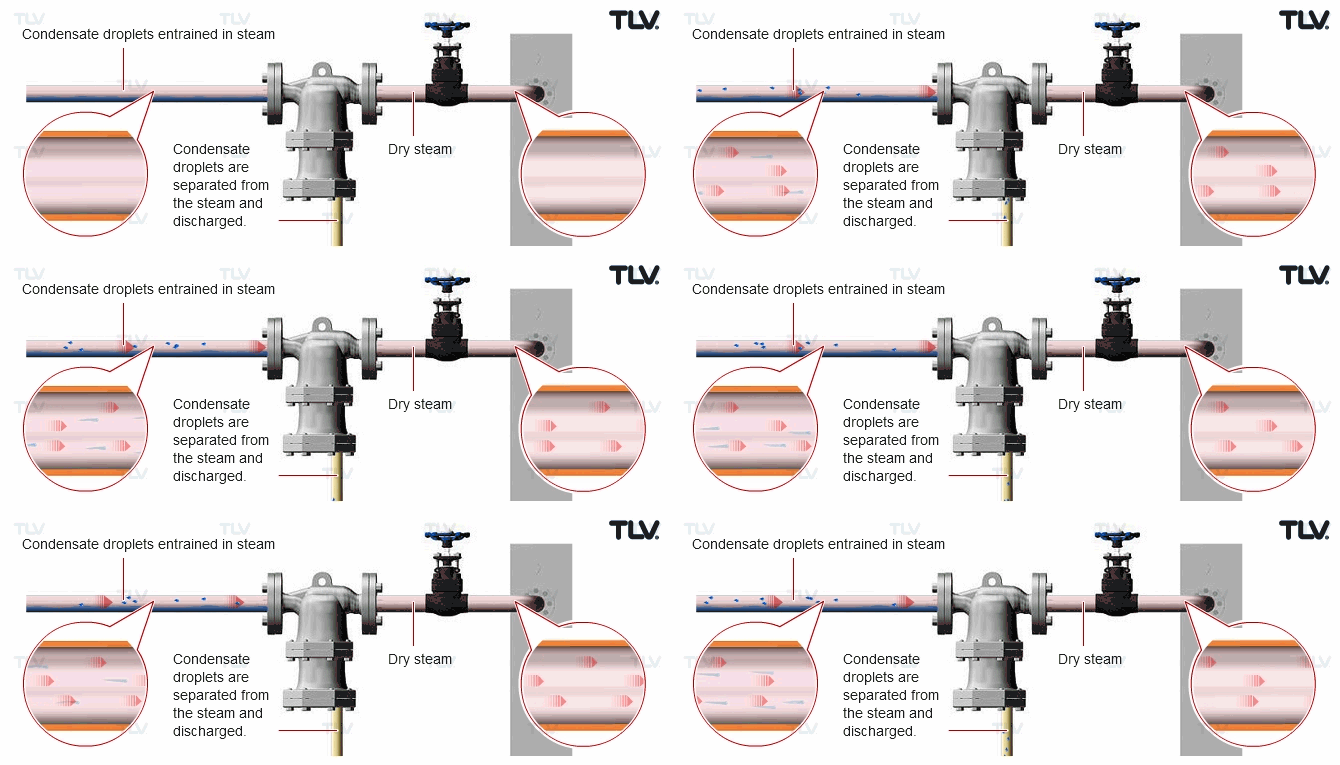
How condensate and water droplets are mechanically removed from steam
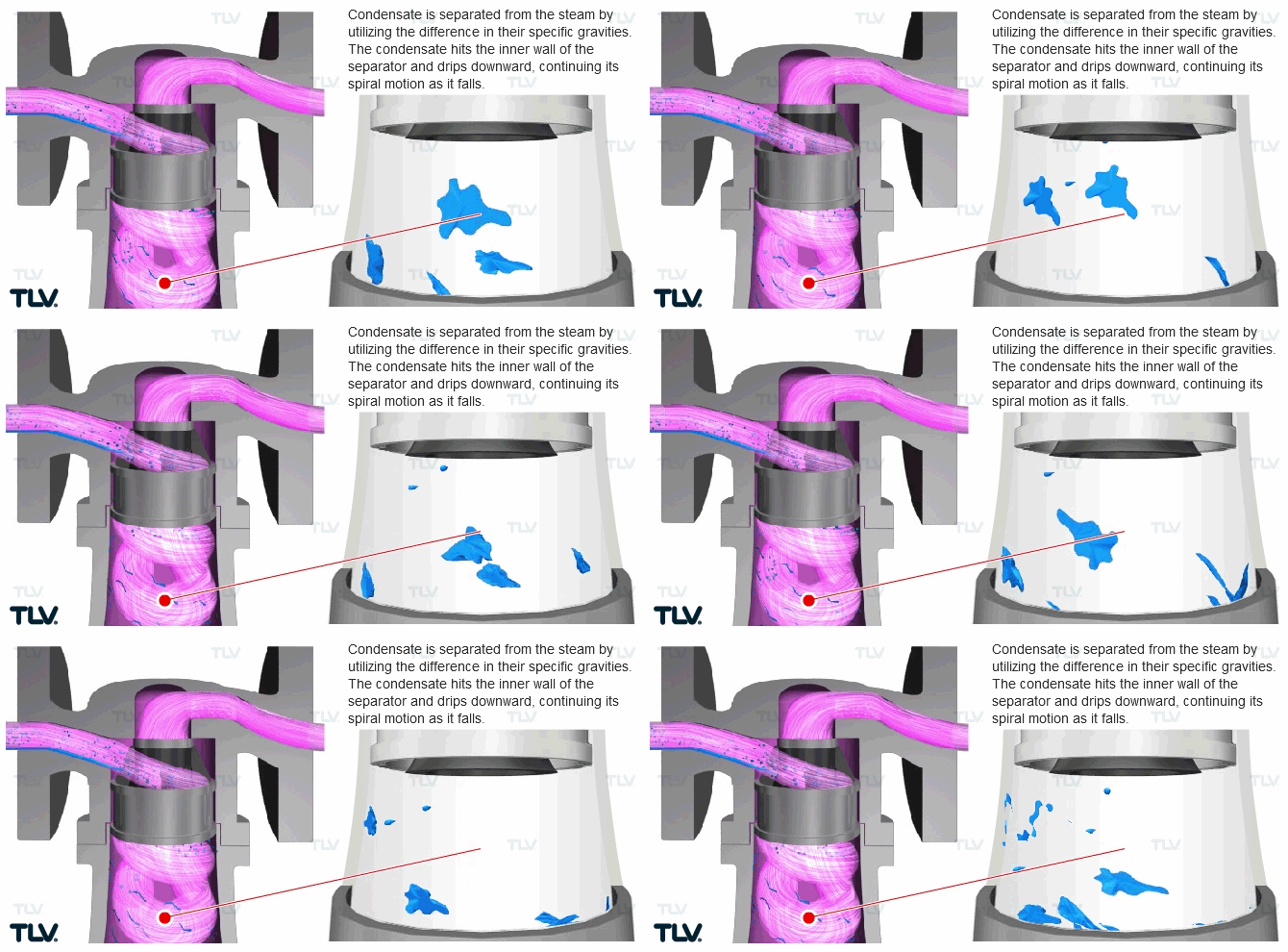
Centrifugal force is used to separate entrained water droplets from steam, by taking advantage of the difference in the specific gravities of liquid and gas to separate the two. In this case, steam is channeled into a spiral flow, causing the heavier condensate droplets to be flung out of the flow and onto the inner wall of the separator. Gravity then pulls the condensate down to the bottom of the separator where a built-in free float steam trap is installed to discharge it.
Super Cyclonic Effects separator (SCE)
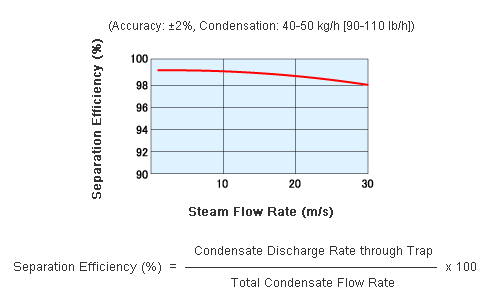
The DC series separators use a cyclone separator to separate and remove water droplets from steam with 98% efficiency (at a flow velocity of 30 m/s). High velocity centrifugal force and directional changes are key factors that enable such a high degree of separation.
Free Float® Steam Trap
The Free Float® enables continuous discharge of condensate while still keeping a steam-tight seal. This rapid discharge design with no back-up is essential to prevent condensate from being re-entrained into the steam flow.
Effect of flow rate on separation efficiency
Applications
Case Study: Incorporating separators into equipment for simple, compact configuration
Dry steam supply to superheated steam generator
| Equipment used |
|
|---|
Problem
Superheated steam generators are often newly introduced equipment, and it is difficult to generate space for installation because they are additional equipment for the site.
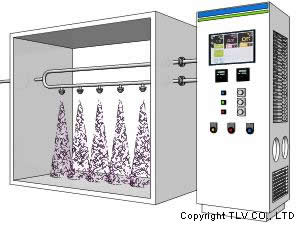
Superheated steam generator
Solutions
- The less water droplets of condensate mixed in the original steam supplied, the higher the efficiency, and the more compact the design can be. Therefore, a cyclone separator with high water droplet separation efficiency and a pressure reducing valve with a built-in separator trap were adopted, and the equipment was successfully made more compact.
- Significantly reduces installation space
- Separator prevents contamination
Key improvements
- A cyclone separator with high separation efficiency reliably removes water droplets, thereby minimizing the number of heating elements.
- A pressure reducing valve with a built-in separator trap significantly reduces installation space.
Supply of dry steam to deodorization equipment
| Equipment used |
|
|---|
Problem
When deodorizing with a steam ejector, the smaller the condensate droplets mixed in the supplied steam, the more stable the vacuum and the more reliable the deodorization.
For this reason, installation of a separator is effective, but in many cases, separators are not initially installed, and it is difficult to generate space for new installation.
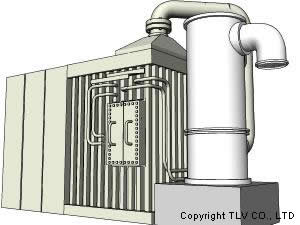 Deodorization equipment
Solutions
- Install a separator or a pressure reducing valve with a built-in separator/trap in the supply steam piping to remove water droplets in the steam.
- Adoption of a separator with a built-in trap eliminates the need for a new installation space.
- Adoption of pressure reducing valve with built-in separator significantly reduces installation space.
Key improvements
- Cyclone separator with high separation efficiency reliably removes water droplets
- DC3S has a built-in trap, eliminating the need for a new installation space
- Pressure reducing valve with built-in separator and trap further reduces installation space significantly.